
How to protect your business effectively: specific measures for small and medium-sized enterprises.
Why are you particularly vulnerable?
In this era of global integration, cybercrime is an ever-growing challenge that no one can overlook. The facts and figures on this page illustrate this vividly. Small and medium-sized enterprises are particularly vulnerable. But it doesn’t have to be that way: By introducing just a few specific measures, you can take some decisive steps that will not only enhance your company’s security, but also seize new business opportunities. This brochure shows you how.
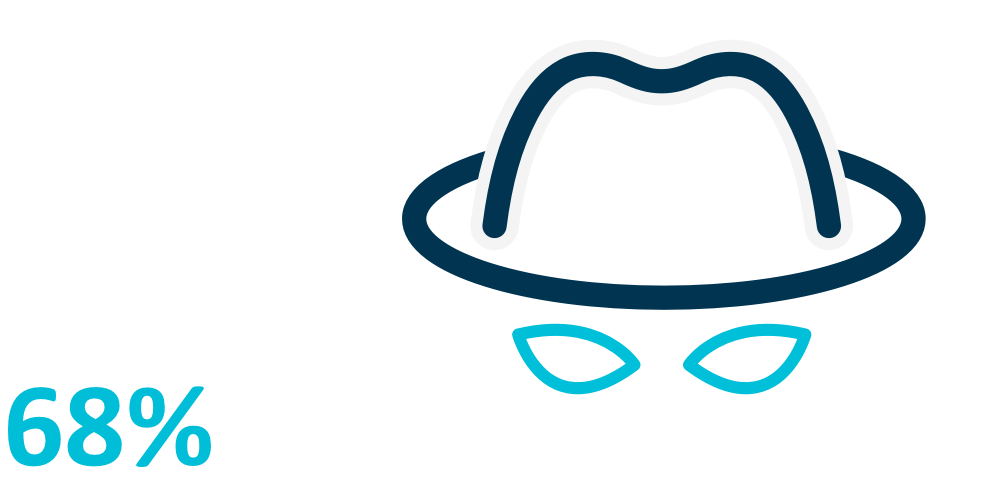
of companies with 10 to 99 employees have been victims of espionage, sabotage, or data theft in the past two years.
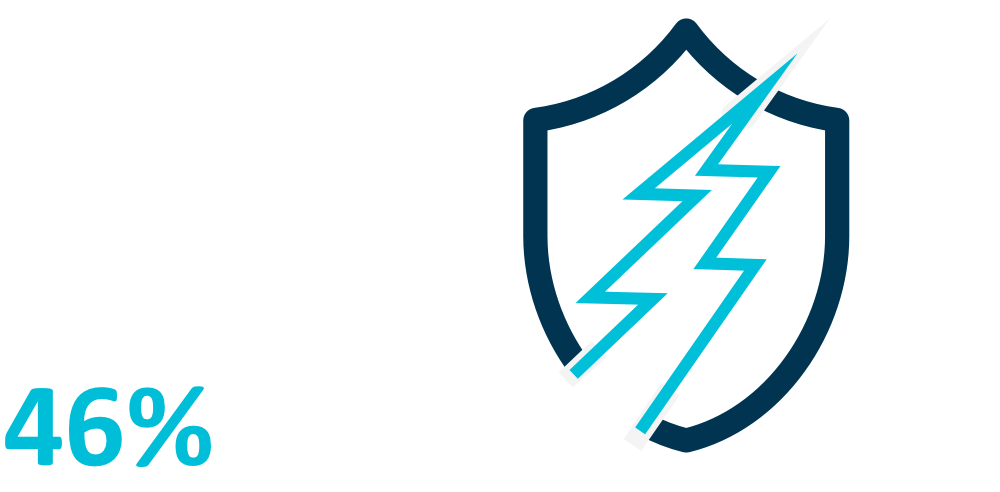
of these companies were harmed by cyberattacks during the same period.

new types of malware, such as ransomware, are discovered daily.
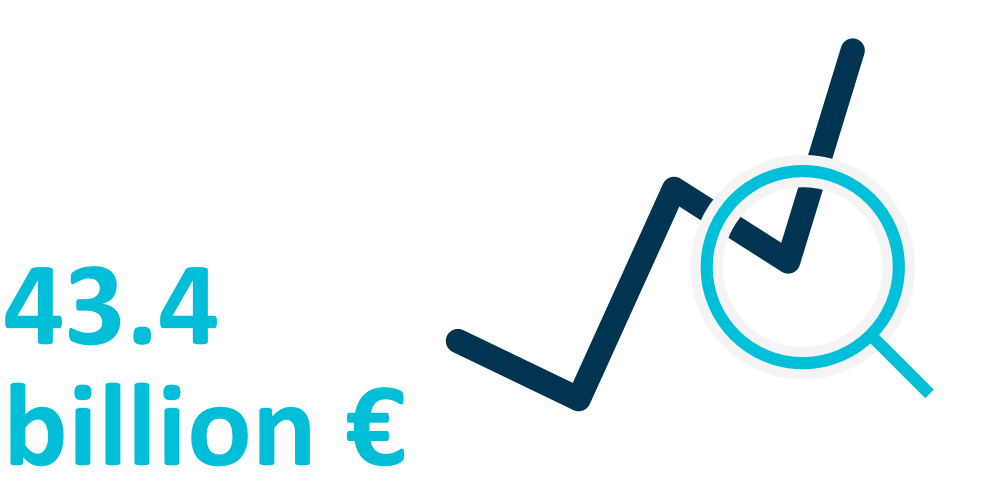
Total losses sustained by German businesses from cybercrime in the past two years.
What is the role of humans?
Cyberattacks launched on small and medium-sized companies in particular are generally discovered by employees. The human factor is therefore an elementary part of the process. By focusing companywide on cybersecurity, raising employee awareness levels about the issue, and providing training, you can take an action that will bolster your company’s line of cyberdefense. After all, conscious and critical behavior in the digital world creates security and trust – and that pays off. At the same time, humans will continue to present the primary gateway for cybercriminals. Carelessness can endanger your company, as the numbers on this page clearly show. Assume your responsibility and create this level of awareness. In doing so, you will take the first important step toward improving cybersecurity at your company.
How can you, as a small or medium- sized enterprise, particularly benefit from this?
As digital integration becomes more widespread, cyber- security is becoming a genuine guarantor of success. That’s because cybersecurity is not merely the response to a threat: If consistently promoted, it offers a real opportunity to enhance your own competitiveness.
Cybersecurity, when implemented systematically, creates many positive effects – especially for small and medium-sized enterprises: It ensures better reliability in your supply chains, it protects your ongoing operations, and it strengthens your trustworthiness with your customers by allowing you to handle their sensitive data responsibly. This security enhances the quality of the products and services you provide, making your portfolio more attractive and strengthening your competitive position on the markets.

You can improve your cybersecurity in three steps
Cybersecurity is a complex challenge that requires a targeted organizational, technical, and personnel-driven response. To use a sports analogy: It’s not a sprint, it’s a marathon. But even the longest journey begins with the first step.
That is why we have divided the brochure into three individual steps – which we call phases. Join us on this journey. You’ll quickly see that each individual step brings you closer to your goal.
Phase 1: Identify threats and assume responsibility
- Practice responsibility
- Heighten awareness of security risks
- Cultivate a cybersecurity culture in your organization
Phase 2: Take action and embed security
- Embed cybersecurity within the organization
- Embed cybersecurity within products and services
Phase 3: Make the structure of cybersecurity transparent, and be a role model for others
- Publish your own cybersecurity setup
- Become active – even outside your own company

PREVIOUS POST
Principle Use Cases – IBM
NEXT POST
Report about Hybrid Threats presented at MSC 2025

You may also like
 External Engagement
Report about Hybrid Threats presented at MSC 2025
Navigating Cybersecurity in an Era of Hybrid Threats
As hybrid threats continue to evolve, cybersecurity has never been more critical. The latest Charter of Trust report, launched at the Munich Security Conference, presents exclusive insights from leading CISOs and CSOs across our Partner network. This report provides a comprehensive analysis of the shifting threat landscape and the strategic actions necessary to enhance global resilience.
Key Insights from the Report
- The Growing Threat Landscape: Cyber adversaries are emerging across the globe, leveraging increasingly sophisticated tactics. Advanced threat detection and multi-layered defense strategies are no longer optional but essential.
- Breaking Down Security Silos: Cyber threats are constantly evolving—organizations cannot afford to wait. A proactive, collaborative approach is critical, fostering open dialogue across industries and sectors.
- Leadership in Collective Defense: Multinational corporations have a unique responsibility to lead in both technical defense and talent development, while also advancing zero trust architectures to mitigate risks effectively.
Collaboration as the Foundation of Cyber Resilience
The experiences of Charter of Trust partners highlight the importance of collective action in addressing the complexities of hybrid threats. Operating in high-stakes environments, these organizations provide valuable lessons for improving industry-wide preparedness.
A Call for Unified Action
Hybrid threats do not recognize national or industry boundaries—our response must be equally interconnected. As both prime targets and key defenders, multinational corporations are uniquely positioned to drive unified, strategic action. Initiatives like the Charter of Trust serve as a model for global collaboration, strengthening the cybersecurity ecosystem and paving the way for a more secure future.
We extend our gratitude to the CISOs and CSOs who contributed their expertise to this publication, including: Kyle Oetken (AES), Haydn Griffiths (Allianz), Paul Bayle (Atos), Christoph Peylo (Bosch), Morten Pors Simonsen (Danfoss), Koos Lodewijkx (IBM), Raphael Otto (Infineon), Natalia Oropeza (Siemens), Norbert Vetter (TÜV SÜD)
As hybrid threats continue to evolve, cybersecurity has never been more critical. The latest Charter of Trust report, launched at the Munich Security Conference, presents exclusive insights from leading CISOs and CSOs across our Partner network. This report provides a comprehensive analysis of the shifting threat landscape and the strategic actions necessary to enhance global resilience.
Key Insights from the Report
- The Growing Threat Landscape: Cyber adversaries are emerging across the globe, leveraging increasingly sophisticated tactics. Advanced threat detection and multi-layered defense strategies are no longer optional but essential.
- Breaking Down Security Silos: Cyber threats are constantly evolving—organizations cannot afford to wait. A proactive, collaborative approach is critical, fostering open dialogue across industries and sectors.
- Leadership in Collective Defense: Multinational corporations have a unique responsibility to lead in both technical defense and talent development, while also advancing zero trust architectures to mitigate risks effectively.
Collaboration as the Foundation of Cyber Resilience
The experiences of Charter of Trust partners highlight the importance of collective action in addressing the complexities of hybrid threats. Operating in high-stakes environments, these organizations provide valuable lessons for improving industry-wide preparedness.
A Call for Unified Action
Hybrid threats do not recognize national or industry boundaries—our response must be equally interconnected. As both prime targets and key defenders, multinational corporations are uniquely positioned to drive unified, strategic action. Initiatives like the Charter of Trust serve as a model for global collaboration, strengthening the cybersecurity ecosystem and paving the way for a more secure future.
We extend our gratitude to the CISOs and CSOs who contributed their expertise to this publication, including: Kyle Oetken (AES), Haydn Griffiths (Allianz), Paul Bayle (Atos), Christoph Peylo (Bosch), Morten Pors Simonsen (Danfoss), Koos Lodewijkx (IBM), Raphael Otto (Infineon), Natalia Oropeza (Siemens), Norbert Vetter (TÜV SÜD)
Read more
February 14, 2025
•
 Security by Default
Security by Default in view of major Cybersecurity Regulations
Navigate the Cybersecurity Regulation Maze with Ease
The Charter of Trust is here to simplify the complexity and guide you through the ever-evolving regulatory landscape.
In today's digitized world, cybersecurity plays a pivotal role in maintaining global stability, economic resilience, and individual privacy. Various regulations have been implemented to safeguard individuals, businesses, and infrastructure from ever-evolving cyber threats. Each regulation, while differing in scope and focus by region, aims to protect against breaches, data leaks, and other malicious activities that could disrupt operations and compromise sensitive information.
At the heart of the Charter of Trust lies a commitment to sharing best practices. Our Security by Default Working Group has meticulously analyzed vast amounts of regulatory texts to provide a clear and concise overview of security by default adoption across key global regions.
Stay Ahead of Cyber Risks with Expert Insights
Our latest report is a vital resource for organizations aiming to effectively manage cybersecurity risks and protect their assets. Covering major regulations from the European Union, India, Japan, People's Republic of China, Singapore, the United Kingdom, and the United States, this report offers valuable insights into compliance requirements worldwide.
The principle of Security by Default, as advocated by the Charter of Trust, provides a universal standard for organizations to meet compliance requirements effectively. By embedding security measures from the outset, organizations can ensure compliance with regulations, foster trust with customers, safeguard their operations, and strengthen their market position. This approach not only helps organizations meet their legal obligations but also enhances their reputation and competitive advantage.
Strengthen Compliance, Build Trust, and Gain a Competitive Edge
By embedding security measures from the outset, businesses can:
- Ensure compliance with international regulations
- Build and maintain trust with customers and stakeholders
- Safeguard operations from cybersecurity threats
- Strengthen their market position with a proactive security approach
The publication shows that regulators worldwide have taken different approaches to pursuing common cybersecurity goals, leading to varied and sometimes conflicting regulatory frameworks. This complexity can make it challenging for organizations to navigate the cybersecurity landscape and ensure compliance with all relevant regulations.
This document serves as a roadmap to better navigate this complex landscape, thereby highlighting the benefits of aligning current cybersecurity regulations worldwide. It supports the Charter of Trust's mission to create a secure digital environment for innovation. By following the guidelines outlined in this document, organizations can effectively manage their cybersecurity risks, protect their assets, and contribute to a more secure digital world.
Don't get lost in the regulatory jungle — get the clarity you need today and download the full report below
The Charter of Trust is here to simplify the complexity and guide you through the ever-evolving regulatory landscape.
In today's digitized world, cybersecurity plays a pivotal role in maintaining global stability, economic resilience, and individual privacy. Various regulations have been implemented to safeguard individuals, businesses, and infrastructure from ever-evolving cyber threats. Each regulation, while differing in scope and focus by region, aims to protect against breaches, data leaks, and other malicious activities that could disrupt operations and compromise sensitive information.
At the heart of the Charter of Trust lies a commitment to sharing best practices. Our Security by Default Working Group has meticulously analyzed vast amounts of regulatory texts to provide a clear and concise overview of security by default adoption across key global regions.
Stay Ahead of Cyber Risks with Expert Insights
Our latest report is a vital resource for organizations aiming to effectively manage cybersecurity risks and protect their assets. Covering major regulations from the European Union, India, Japan, People's Republic of China, Singapore, the United Kingdom, and the United States, this report offers valuable insights into compliance requirements worldwide.
The principle of Security by Default, as advocated by the Charter of Trust, provides a universal standard for organizations to meet compliance requirements effectively. By embedding security measures from the outset, organizations can ensure compliance with regulations, foster trust with customers, safeguard their operations, and strengthen their market position. This approach not only helps organizations meet their legal obligations but also enhances their reputation and competitive advantage.
Strengthen Compliance, Build Trust, and Gain a Competitive Edge
By embedding security measures from the outset, businesses can:
- Ensure compliance with international regulations
- Build and maintain trust with customers and stakeholders
- Safeguard operations from cybersecurity threats
- Strengthen their market position with a proactive security approach
The publication shows that regulators worldwide have taken different approaches to pursuing common cybersecurity goals, leading to varied and sometimes conflicting regulatory frameworks. This complexity can make it challenging for organizations to navigate the cybersecurity landscape and ensure compliance with all relevant regulations.
This document serves as a roadmap to better navigate this complex landscape, thereby highlighting the benefits of aligning current cybersecurity regulations worldwide. It supports the Charter of Trust's mission to create a secure digital environment for innovation. By following the guidelines outlined in this document, organizations can effectively manage their cybersecurity risks, protect their assets, and contribute to a more secure digital world.
Don't get lost in the regulatory jungle — get the clarity you need today and download the full report below
Read more
February 13, 2025
•
 External Engagement
Harmonising Regulation - a CoT perspective
In response to rising cyber threats, governments are enacting new cybersecurity laws and regulations, with some, like the United States (US), moving from voluntary public-private partnerships to more stringent regulatory approaches, while others, like the European Union (EU), are updating existing regulations (e.g. the Network and Information Security (NIS) Directive 2, or NIS 2) and creating new ones (e.g., Cyber Resilience Act, CRA). These efforts often set precedents for other nations, but the lack of international coordination in cybersecurity regulation remains a challenge. This fragmentation, coupled with shortages of cybersecurity talent, risks diverting resources from essential cyber defense to compliance, potentially increasing costs, complexity, and undermining resilience and innovation. Some solutions include reciprocity agreements, adopting international standards, and leveraging third-party assessments to streamline regulations and improve global alignment.
To read the full publication, see the download link below.
To read the full publication, see the download link below.
Read more
October 15, 2024
•